
Enter your total volume and select common bag or truck sizes to estimate delivery quantities instantly.
Bags of Topsoil Calculator (Volume Conversion)
Convert an already calculated volume of topsoil into small bags, bulk bags, or truckloads. Choose standard sizes to compare delivery options.
When you’re planning a garden or landscaping project, buying bags of topsoil just makes sense. They’re easy to carry, simple to stack, and you feel in control of the whole thing.
But then reality hits.
You start loading them into the cart. You stack them in the driveway. And somewhere around bag fifteen, you realize this is going to cost a lot more than you thought.
That’s exactly what this calculator helps you avoid. It sorts out two things most people get confused about:
How many bags of topsoil do you actually need? Does buying bags even make sense, or is bulk the better call?
Put in your total soil volume and the calculator converts it straight into bags. No guesswork, no mental math, no standing in the store aisle doing calculations on your phone. Just a clear number so you can buy right the first time.
Know your area but not your volume? The Soil Bags Calculator works from length, width, and depth instead.
If you are unsure which bag to pick, see topsoil vs garden soil vs potting soil for how the bagged products differ.
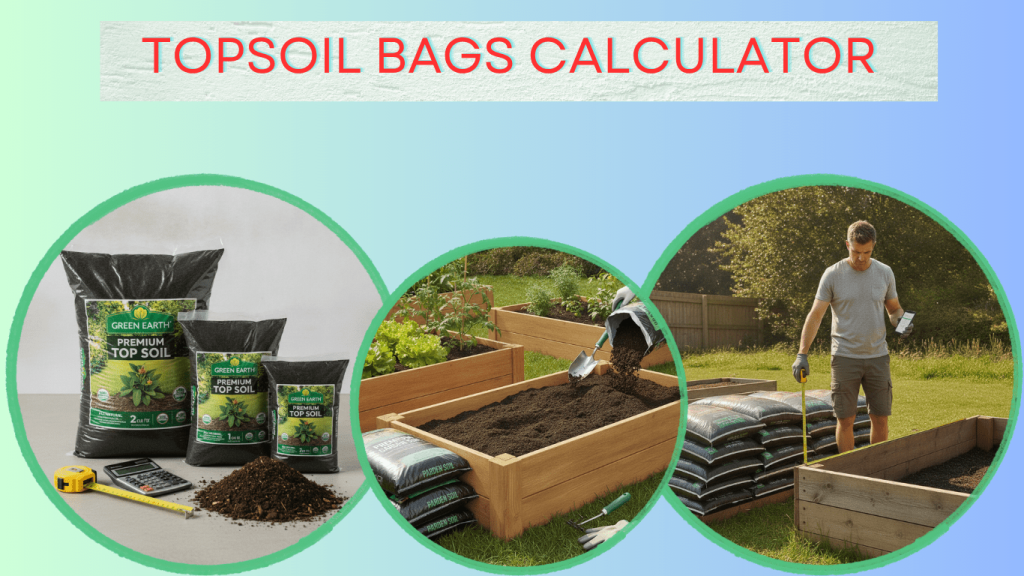
What a Bag of Topsoil Really Represents
Something that confuses a lot of people — and honestly, it makes sense why.
Topsoil bags are labeled by volume, not weight. But when you pick one up, the weight is the big number printed all over the packaging. So most people assume they’re buying by weight. They’re not.
Volume is what actually tells you how much soil is in the bag. Weight just tells you how heavy it is to carry.
Common Topsoil Bag Size & Weight
| Bag Size | Weight (Approx) | US cu. ft. Eq. | Market | Best For |
|---|---|---|---|---|
| 20 Liters | 12–16 kg | 0.71 cu. ft. | UK / Europe | Small top-ups, pots, and patch repairs. |
| 25 Liters | 15–20 kg | 0.88 cu. ft. | UK / Canada | Small bags work well for flower pots and indoor plants. |
| 30 Liters | 18–22 kg | 1.06 cu. ft. | UK / Europe | A middle-ground size between small and medium bags. |
| 40 Liters | 25–30 kg | 1.41 cu. ft. | UK / US / CA | Medium bags are good for garden beds and small lawn repairs. |
| 50 Liters | 35–40 kg | 1.76 cu. ft. | UK / Europe | If you’re starting a new garden bed, these save you money. |
| 60 Liters | 45–50 kg | 2.12 cu. ft. | US / Canada | Value packs cover bigger areas but they’re heavy to move around. |
| 0.75 cu. ft. (≈21.2 L) | ~40 lbs | 21.2 Liters | US Standard | The most common weight-labeled bag at US home improvement stores. |
| 1.0 cu. ft. | ~18–22 kg | 28.3 Liters | US Standard | This is the most common volume-labeled bag size you’ll find in US stores. |
| 2.0 cu. ft. | ~35–45 kg | 56.6 Liters | US Pro | Larger bags are built for professional landscaping and big garden beds. |
| Bulk Bag | 800–1000 kg | 27 cu. ft. | US/UK/CA | If you’re laying a full new lawn or running a bulk project, go straight to the biggest size available. |
Keep in mind that weight labels like 40 lb or 50 lb can mislead you. Moisture content and soil density change from bag to bag. Two bags with the same weight can hold different amounts of usable soil.
That’s why volume gives you a more honest number when you’re working out coverage. A standard 1.0 cu. ft. bag holds about 28.3 liters of soil. The larger 2.0 cu. ft. bags hold roughly 56.6 liters — useful to know if you’re trying to figure out how many pounds 56.6 liters of soil actually weighs (it varies, but typically 70–90 lbs depending on moisture).
This calculator works strictly on volume. That way you get consistent results no matter what brand you buy or how dry or wet the soil is.
How the Bags of Topsoil Calculator Works
This calculator starts with your total soil volume — in cubic yards or cubic meters. Then it converts that into liters and divides by your bag size. That’s your bag count.
The result always rounds up. Never down. And here’s why that matters — soil settles after you spread it. Ground is never perfectly flat. A little always spills. If your number rounds down, you will run short before the job is done. Rounding up keeps that from happening.
The tool works with cubic yards for US projects, cubic meters for everywhere else, and it has different bag size options so you can match what your supplier actually sells.
This is how people in the trade do it. Volume first, bags second, always round up.
How Many Bags of Topsoil Are in a Cubic Yard?
This is one of the most frequently asked questions related to topsoil — and for good reason. A single cubic yard holds approximately 764 liters of soil. That’s the number everything else flows from.
Based on that, here’s how many bags of topsoil you need per cubic yard:
- 20-liter bags → about 39 bags per cubic yard
- 25-liter bags → about 31 bags per cubic yard
- 30-liter bags → about 26 bags per cubic yard
- 40-liter bags → about 19 bags per cubic yard
- 50-liter bags → about 16 bags per cubic yard
- 0.75 cu. ft. bags (the common 40 lb bag) → 36 bags per cubic yard
- 1.0 cu. ft. bags (28.3 liters) → 27 bags per cubic yard
- 1.5 cu. ft. bags → 18 bags per cubic yard
- 2.0 cu. ft. bags (56.6 liters) → about 14 bags per cubic yard
- 3.0 cu. ft. bags → 9 bags per cubic yard
These are estimates. Real coverage can vary a little depending on how compact the soil is and how much moisture it holds. Add one or two extra bags to your order just to be safe.
One thing worth knowing: a cubic yard equals roughly 765 liters, and a cubic meter equals about 1,000 liters. If your supplier quotes in cubic meters instead of yards, the bag counts will run noticeably higher.
How Many Cubic Feet Are in a 25L Bag of Soil?
A 25-liter bag of soil is approximately 0.88 cubic feet. That means you need about 31 bags to fill one cubic yard, or 40 bags for one cubic meter.
A 25L bag covers roughly 10.6 square feet at 1 inch deep. At 3 inches deep that drops to about 3.5 square feet. For coverage by bag size and depth, the Soil Bags Calculator shows the area each bag covers.
Real-World Coverage Examples
Numbers are easier to trust when you can see them in action. Here are two simple examples that show how bags add up on a real project.
Take a lawn that is 1,000 square feet at around 1 inches deep. That comes to roughly 3 cubic yards of topsoil. To cover that you need:
- Around 95 bags if you’re buying 25L bags
- Around 76 bags if you’re buying 30L bags
- Around 57 bags if you’re buying 40L bags
That’s a lot of bags to carry. Worth knowing before you start loading up a cart.
Now take a small garden bed, 4 by 8 feet at 4 inches deep. That’s less than half a cubic yard. For a job that size, bags make perfect sense. Easy to handle, no bulk delivery needed, no leftover soil sitting around.
This is exactly why running the calculator before you buy matters. You see the real number upfront and make a smarter choice.
Bags vs Bulk Topsoil – Which Is Better?
This comes down to your project size and access, not just personal preference.
Our guide to topsoil cost works out where a delivered bulk order starts to beat bags.
When Bags Are the Better Choice
Bagged topsoil works best when:
- Your project area is small
- A truck can’t reach your site
- You’re doing light repairs or patch work
- You need control over exactly where the soil goes
For small beds and touch-ups, bags are just easier. Yes, you pay more per unit. But you carry exactly what you need, place it where you want, and there’s no bulk delivery to deal with.
When Bulk Topsoil Is the Smarter Choice
Bulk topsoil becomes the better option when:
- You need more than 1–2 cubic yards
- You’re installing or renovating a lawn
- Labor efficiency matters
- Cost savings are a priority
Buying in bulk costs less per cubic yard than bags — even after you factor in the delivery fee. And honestly, it’s less work too. One delivery, one pile, done. A standard bulk bag typically holds around 25–27 cubic feet of soil, which is close to one full cubic yard.
Avoid Common Mistakes When Buying Topsoil Bags
A lot of homeowners get this wrong. And it’s usually one of the same four mistakes:
- They measured the area but forgot about depth
- They mixed up square feet with cubic yards
- They relied on weight instead of volume
- They never added anything for settling or waste
Any one of these throws your whole estimate off. You either buy too much or come up short halfway through the job.
Using the bags estimator fixes this. It works from volume, divides by your bag size, and gives you a number you can actually shop with.
When to Use a Different Calculator
This calculator works best when you already know your soil volume. If you’re not there yet, start with a different tool first.
- Haven’t measured your length and width yet? Use an area calculator first.
- Thinking about bulk delivery instead of bags? Check the truckload calculator.
- Trying to figure out total cost with delivery fees? The cost calculator is what you need.
Each tool does one job. Use the right one for where you are in the process.
Frequently Asked Questions
It depends on your total volume and the bag size you’re buying. Put those two numbers into the calculator and you get your bag count straight away. For reference: one cubic yard takes about 31 bags of 25L soil, or about 19 bags of 40L soil.
One cubic yard holds approximately 764–765 liters of soil. That’s the base conversion this calculator uses. A cubic meter is larger — roughly 1,000 liters — so if you’re working in metric, your bag count will be higher.
A 40-liter bag covers roughly 17 square feet at 1 inch deep. A 25L bag covers about 10.6 square feet at the same depth, and coverage drops in proportion as the depth increases.
For medium to large projects, yes. Bulk topsoil almost always works out cheaper per cubic yard than buying bags — even when you include delivery.
A 2.0 cu. ft. bag (which holds about 56.6 liters of soil) typically weighs between 35 and 45 kg depending on moisture content. Dry soil is noticeably lighter than freshly bagged or wet soil.
A 2.0 cu. ft. bag holds about 56.6 liters of soil, which typically weighs 70–90 lbs (about 32–41 kg) depending on moisture content — dry soil sits at the lower end, wet soil at the higher end.
A 1.0 cu. ft. bag holds about 28.3 liters of soil, which typically weighs 35–45 lbs (about 16–20 kg) depending on moisture — roughly half the weight of a 2.0 cu. ft. bag.
A 40 lb bag of topsoil is typically about 0.75 cubic feet. Since one cubic yard is 27 cubic feet, that works out to roughly 36 bags of 40 lb topsoil per cubic yard. Weight per bag can vary with moisture, so treat this as a working estimate rather than an exact count.
Should I buy extra bags?
Yes, always add a little extra. Around 5 to 10 percent covers settling and any uneven patches in the ground.
Can I mix bag sizes?
You can mix bag sizes but it makes tracking your coverage harder than it needs to be. Stick to one size and the math stays simple.
Final Thoughts
Estimating topsoil is not just about getting a number. It’s about choosing the right way to buy for your specific project.
The bags calculator takes your soil volume and turns it into a clear bag count — whether you’re working in cubic yards, cubic meters, or liters. That one number helps you make a better buying decision before you spend anything.
Whether you need a few bags for a garden bed or a full bulk delivery for a big lawn, the same rule applies. Plan it right before you start and the job goes smoother with far fewer surprises along the way.
Daniel
Founder & Editor – TopSoilCalcOnline.com
Daniel is the founder and primary editor of TopSoilCalcOnline.com, a practical resource built to help homeowners, landscapers, and contractors accurately calculate topsoil, compost, and soil mix requirements. With hands-on experience in lawn preparation, raised beds, topdressing, and bulk soil planning, Daniel focuses on turning complex volume calculations into simple, reliable tools. Every calculator and guide on this site is designed to reduce material waste, prevent over-ordering, and help users plan landscaping projects with confidence and precision.